

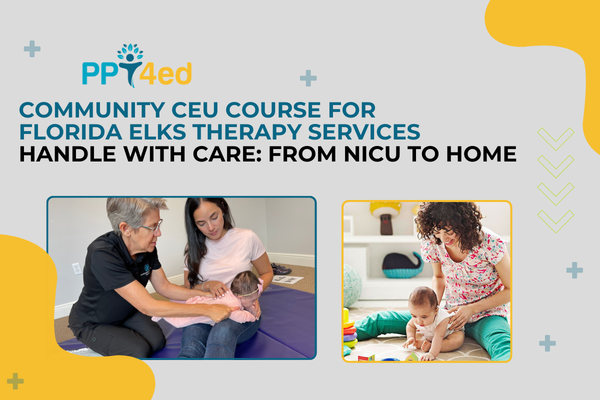
Handle with Care:
Infant Development/Handling Techniques & Hospital to Home for NICU Grads
A Continuing Education Course for PTs, SLPs and OTs
No. Of Credits: 8 CEU Hours
Florida Elks Children’s Therapy Services in Umatilla, FL
March 3, 2026
Course Duration: 8:30AM - 5:00 PM
Price: Registration through Florida Elks Therapy
Course Description
This course is being provided to Florida Elks Therapy Service Providers.
Program Objectives
Program Objectives: Part 1
- Demonstrate knowledge of key elements and timing of typical infant/toddler development related to the musculoskeletal, sensory, and neurological systems.
- Understand whole child development for typical infants and toddlers
- Identify signs of atypical development in infants and toddlers
- Identify how underlying sensory-motor control and routine habits of positioning/handling contribute to development
- Learn importance of continuous assessment of alignment, postural control, and tolerance of sensory input for effective treatment
- Define handling, postural control, hand placement, and basics for movement facilitation for infants and toddlers
Program Objectives: Part 2
- Identify common challenges faced by NICU graduates and their families when transitioning home.
- Recognize developmental considerations and risk factors for infants with severe prematurity and NICU-related diagnoses.
- Differentiate handling approaches for tone differences (high tone vs. low tone) and across various patient examples.
- Develop interdisciplinary strategies for effective patient care, using observation checklists for assessment.
- Apply evidence-based strategies to support feeding, breathing, sensory needs and bowel regulation in medically complex infants.
- Collaborate with caregivers to promote safe, functional routines at home that enhance quality of life.
Participants will be able to
Participants will be able to:
- Demonstrate knowledge of key elements and timing of typical infant/toddler development related to the musculoskeletal, sensory and neurological systems.
- Identify signs of atypical development and correlate impact of alignment, social engagement and self initiated movement on development and progression in milestones.
- Understand and implement handling/positioning techniques to facilitate and promote optimal development in infants/toddlers with high tone, low tone, prematurity and/or developmental delay.
Course Schedule
Course Schedule:
8:00-8:30 Sign In, Introductions
8:30-9:30 Lecture: Whole child development, key milestones, principles of infant handling
- Musculoskeletal alignment and development pre- and post-natally
- Sensory and neurological system development, effects of typical sensory-motor input and feedback on developmental skills acquisition
- Identify atypical development from 0-3 years
- Considerations for neurological conditions/deficits
- Impact of atypical alignment, sensory awareness and/or muscle strength on developmental skills
- Identify how underlying sensory awareness and regulation interacts with self-generated movement and routine positioning/handling contributes to development
9:30-10:15 Video Demo and Modeling with Dolls in classroom:
- Postural control, tone management, and basic handling techniques.
10:45-11:15 Lab on Mats: Utilize dolls and attendees to practice handling techniques, postural control, hand placement, and movement facilitation
- What is Handling? The power of touch
- Key Points of Control: Optimal hand position
- Goals of Handling: Where to start? Where do you want to go? How are you going to get there?
- Improving head/trunk control
- Transitional movements (sitting to quadruped, quadruped to tall kneel, pull to stand, stand to floor)
- Improved UE function
11:15-12:00 Lecture: Importance of continuous assessment of alignment, postural control, and tolerance of sensory input for effective treatment
- Use of observation checklists
- Understand impact of alignment for fine motor control, speech, swallowing/chewing, balance and ambulation - demonstration
- Recognize underlying sensory awareness/regulation ipact on self-generated movement - demonstration of visual, auditory and tactile impairment
- Gain awareness of the contribution of routine positioning and handling by caregivers in promoting optimal development
1:00-3:00: NICU Grads -What’s Different?
- Observe and ask about EVERYTHING!
- Common anatomical and physiological differences
- Medical complexities and associated impairments
- Compensatory postures and alignment
- Impact on feeding and GI function, breathing, social interaction, sensory tolerance
- A special note about baby scars
3:00-4:00: Lab Handling approaches for NICU grads
- Sensory input matching individual needs
- Developing successful head and trunk control
- Myofascial release
- Ribcage mobilization and diaphragm facilitation
- UE weight bearing related to reflux, breathing
- UE reaching related to postural control
- Positioning options/supports for day and night
4:00-4:45: Group Video Assessment
- Observe and assess typical and atypical infants and toddlers
- Create priority lists for each example to optimize therapy, such as:
- Modifications for alignment and postural control
- Enhance sensory tolerance
- Grading demands to child’s capabilities
- Caregiver education key points
- Understanding scope of practice and when to refer
4:45-5:00 Wrap up, complete course survey and sign out
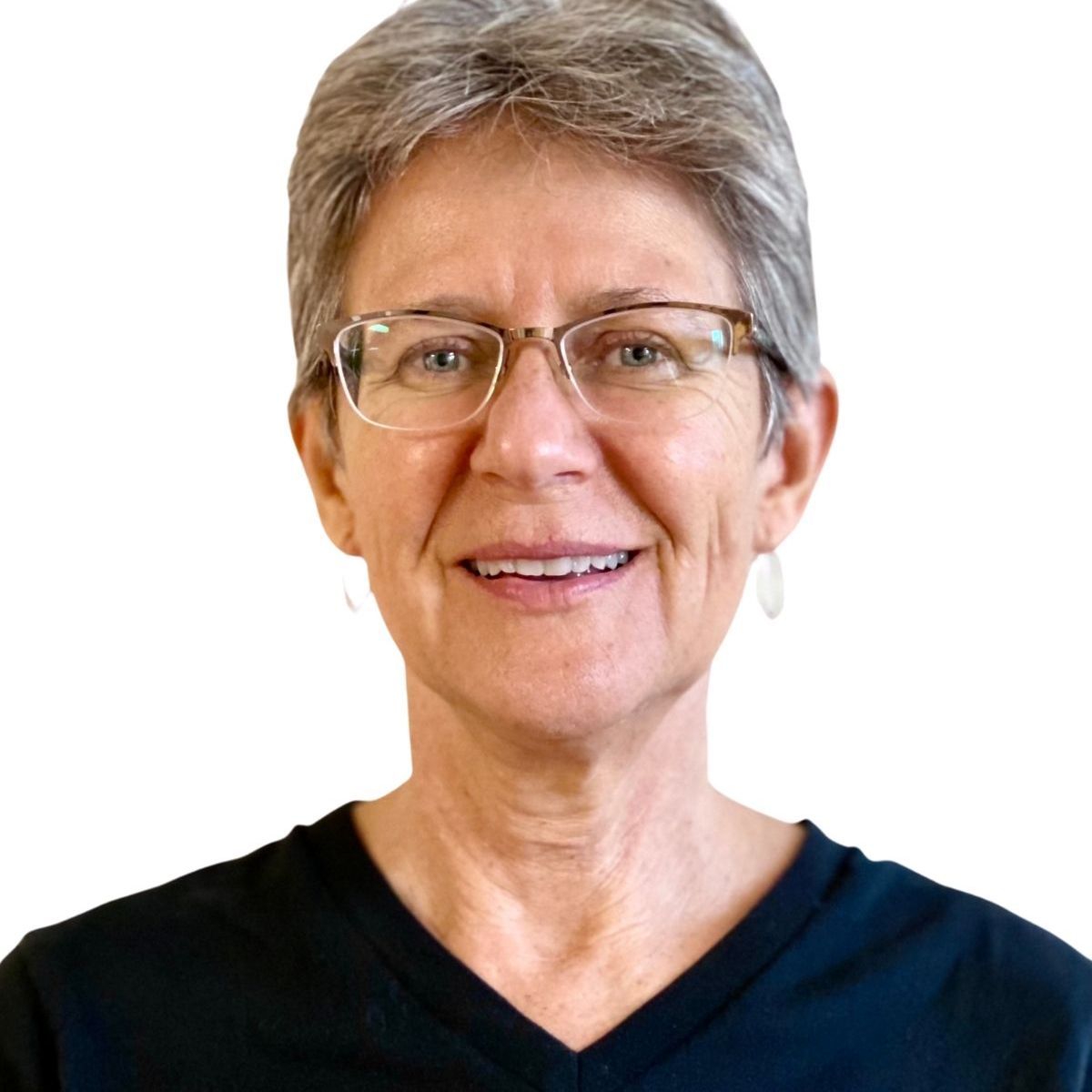
Mary Pengelley, PT, DPT
Mary Pengelley has been a pediatric physical therapist since 1983. She has worked with children of all ages including young adults who have grown up with a variety of developmental disabilities, including cerebral palsy, traumatic brain injury, autism spectrum disorder, genetic disorders, muscular dystrophies, spinal muscular atrophy, brachial plexus injury, and torticollis. Mary is the Rehab Director at Progressive Pediatric Therapy in West Palm Beach FL, is certified as an Assistive Technology Practitioner, teaches pediatric classes for DPT students, and also teaches continuing education webinars and live classes for licensed therapists.