

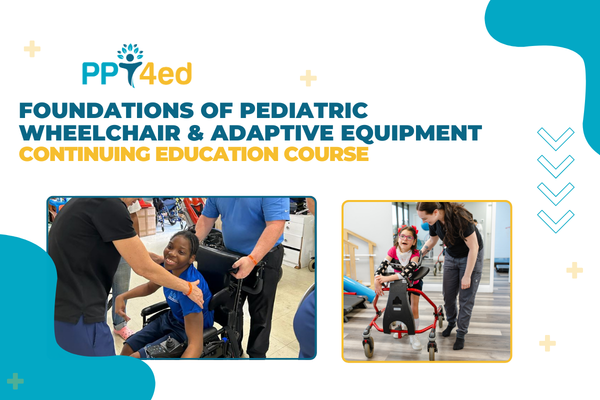
Foundations of Pediatric Wheelchair & Adaptive Equipment
No. Of Credits: 2 CEU Hours
Live Webinar
Saturday, May 16, 2026
Course Duration: 9:00AM - 11:00AM
Price:
$45 Regular Pricing
$40 Early Bird until 4/17/2026 using Coupon Code EARLYBIRD26
$40 Group discount until 5/1/2026
Course Description
This introductory course provides pediatric therapists with foundational knowledge of wheelchair mobility and an overview of common adaptive equipment for children. Emphasis is placed on understanding when mobility equipment is appropriate, recognizing basic positioning needs, and supporting caregivers through safe use and education. A review of high tech and low tech options will be discussed, as well as cost vs. benefit, and how adaptive equipment can enhance therapy goals. Attendees will review effective supporting documentation including letters of medical necessity and wheelchair evaluations. This course is designed for clinicians beginning their involvement in pediatric equipment decision making.
Program Objectives
Upon completion of this course, participants will be able to:
- Identify common indications for pediatric wheelchairs and adaptive mobility equipment
- Describe basic wheelchair components and terminology
- Recognize how posture and alignment impact function and participation
- Review selection process of adaptive equipment for sitting, standing, mobility and walking relative to age, cognition, family needs, and support
- Understand important considerations related to growth, environment, and specific diagnoses
- Understand the therapist’s role in caregiver/client education and safety
- Value a collaborative approach to provision of adaptive equipment and wheelchairs for children, involving clients, caregivers, educators, seating or mobility specialists and therapists.
Participants will be able to
Upon completion of this course, participants will be able to:
- Identify common indications for pediatric wheelchairs and adaptive mobility equipment
- Describe basic wheelchair components and terminology
- Recognize how posture and alignment impact function and participation
- Review selection process of adaptive equipment for sitting, standing, mobility and walking relative to age, cognition, family needs, and support
- Understand important considerations related to growth, environment, and specific diagnoses
- Understand the therapist’s role in caregiver/client education and safety
- Value a collaborative approach to provision of adaptive equipment and wheelchairs for children, involving clients, caregivers, educators, seating or mobility specialists and therapists.
Course Schedule
Course Schedule:
Module 1: Introduction to Pediatric Mobility
- Role of mobility in participation and development
- Common diagnoses requiring equipment support
- Addressing caregiver concerns and misconceptions
Module 2: Overview of Adaptive Equipment
- Manual wheelchairs
- Walkers and gait trainers
- Adaptive seating basics
Module 3: Posture, Alignment, and Safety
- Basic positioning principles
- Safety considerations at home, school, and in the community
- Case Studies
Module 4: Clinical Decision Making
- Scope of practice
- Documentation basics
- Referral pathways

Mary Pengelley
Mary Pengelley has been a pediatric physical therapist since 1983. She has worked with children of all ages including young adults who have grown up with a variety of developmental disabilities, including cerebral palsy, traumatic brain injury, autism spectrum disorder, genetic disorders, muscular dystrophies, spinal muscular atrophy, brachial plexus injury, and torticollis. Mary is the Director of Education and Research at Progressive Pediatric Therapy in West Palm Beach FL, is certified as an Assistive Technology Practitioner, teaches pediatric classes for DPT students, continuing education webinars and live classes for licensed therapists.